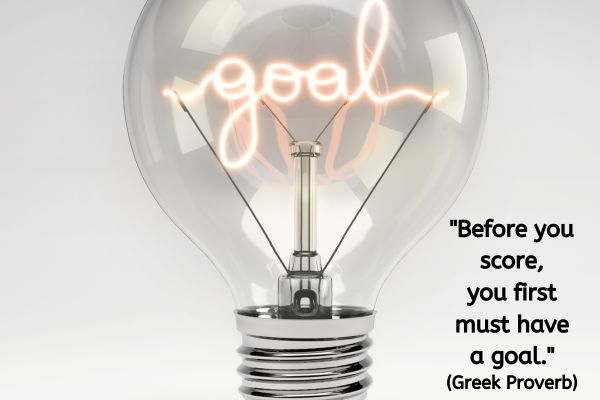
“A goal is a dream with a deadline.”
(Napoleon Hill)
Dec 31 2012
Aug 09 2012
“If you want to be happy, set a goal that commands your thoughts, liberates your energy, and inspires your hopes.”
(Andrew Carnegie)
Jun 30 2012
Jun 29 2012
In today’s guest post Andrew A. Faccone draws upon his own life experiences and his coaching expertise to share 3 points around life, commitment and time.

“Life is like riding a bicycle. To keep your balance you must keep moving.”
(Albert Einstein)
We are all given 24 hours a day, 1,440 minutes per day and 86,400 seconds per day to use how we see fit.
Those of us reading this post are very fortunate and blessed to choose how we are to use that precious time we are given. That allotted time has a short life span, it must be used immediately and it cannot be carried over. If it is not used properly it expires.
It is our choice to maximize or minimize how we allocate our days, weeks, months and years that we are given in our lifetime. The mystery of life reveals that life is not a straight line, there is no instruction booklet on how to live and we are responsible for our actions.
The attention that we pay to the little things throughout life has a dramatic effect on the outcomes of our life as we progress and mature throughout our lifetime. Since our birth we have all pursued different paths, we have learned, prospered, been knocked down and despite the challenging conditions have succeeded as well as failed in some of our endeavors. The challenges have made us stronger and the shortcomings have taught us what not to repeat in the future. In some cases we are all learning from those shortcomings.
Past events somehow always re-appear at various times throughout our lives. In the time of our youth we pursued our education and the playful desires of our youth. Academics, athletics, music, literature, sciences, religious education, play time with our childhood friends, youth and civic groups, participation with a strong supervision from our families who attended those important life events. They cheered us on in victory and comforted us when the results did not materialize as hoped for.
When our formal education ended we then used our educational backgrounds or God given talents to find a way to make a go of it on our own. Welcome to being a grown up! We now face the commitments of professional life, parenthood, earning a living, providing for our families, advancing our professional careers and now we have become those attendees routing for our family members as they progress through their childhood and young adult activities that we participated in in the not so distant past.
Where is the person who wanted to change the world and make the difference in the world?
Is this life still a life in balance? Is there equal push and pull in our daily activities? Finding that balance, the constant struggle that addresses all of the aspects of our lives. Spirituality, physicality, and mentality.
I am asked many times in all of my personal & professional travels how did I get where I am in life? I have some of the answers to this question and some answers I do not have. I have been blessed to have had some extraordinary people that have been a part of my life. Nine years of a disciplined Catholic school education, athletic participation in high school and college, a loving family along with several key family members who taught me about the true lessons of life and that I can do anything that I set myself to attaining.
I try to rely on 3 key points and try to use them as my daily guide as I try to find a balance between the many commitments I am involved with in my daily life both personally and professionally.
What you say will determine what you will become. I have always been a believer in word affirmations. The words you are projecting will impact your individual outcomes. If you’re not projecting positive words and expecting great things to occur, they will not happen. If you don’t believe something will happen nobody else will. Use those empowering words to get you to where you want to be.
Life is an attitude -have a good one and you will enjoy the wonderful journey. When you start to make these new adjustments in your daily activities, changes in those daily habits, week after week, month after month, and year after year you will start to recognize that new person in the mirror who you have not seen in some time. Start small but think big, because you can do it, great things are coming your way… it all depends on you!
Andrew Faccone, MBA is employed in the healthcare industry as a long term care account specialists in the United States near the New York Metropolitan area. Andrew has over 18 years experience as an athlete,& coach positively impacting the lives of athletes he has coached. Andrew is available for speaking engagements of any size or location and individual coaching sessions.
Contact Andrew A. Faccone at aaf326
yahoo
com or
Linkedin : http://www.linkedin.com/pub/andrew-a-faccone-mba/24/291/3b2
Cell Phone 732 614 8425 Eastern Time Zone
Background on Image above title via: FreeDigitalPhotos.net
Jun 01 2012
Dave Oldham, shares his experience as a coach, teacher, entrepreneur and charity founder in today’s guest post:
by Dave Oldham
Kevin Hall, the author of the book Aspire defines a coach as someone who “carries a valued person from where they are to where they want to be!” This comes from the concept of a stagecoach from generations ago, which was the method of travel for the elite.
As a coach, it is so important that our belief system includes the value of the people we are working with. Without fully giving value to the people you work with, your heart cannot be engaged in the process of taking them to where they want to be. Once you have value for the individual, you can then focus on where THEY want to get to, not where YOU want them to get to. This can be a challenge as the coach may see a different path.
To meet this end, there is a simple three step process to follow. The key is in the simplicity of it all, and the magic comes from daily, consistent action.
As a high school basketball coach, the above plan has allowed our program to guide more high school athletes to college and university basketball than anyone in Western Canada over the past five years. The process is about the athlete, which has contributed to 100% buy in. Training sessions are focused and target specific areas that will allow the athlete the opportunity to play post-secondary athletics. Belief systems are instilled that promote excellence, commitment, and daily action to self improvement. The process is all about working with the athlete on where they want to go. Athletes are challenged to explore their thinking, push the limits, and challenge themselves; however setting goals and deciding where they want to go is left up to them.
We also go through this process as a team at the start of our season. Everyone sets goals, but the art of coaching comes in the plan set forth to obtain those goals.
The X’s and O’s of coaching basketball are irrelevant to this, and therefore can be applied to any sport, or any coaching situation in or out of sport. Coaching is about building relationships and as Kevin Hall states “carry a valued person from where they are to where they want to be!”
Dave Oldham is a high school teacher and basketball coach, entrepreneur, charity founder/director (www.childrenofecuador.ca), husband and father to two girls, and world traveller.
Source: coachingconfidence.co.uk via Coaching on Pinterest
Apr 10 2012
“The reason most major goals are not achieved is that we spend our time doing second things first.”
(Robert J. McKain)
Mar 02 2012
Coach Richard Nugent shares his expertise and knowledge in today’s guest post as he invites you to:
I love writing articles for this blog. Mainly because I know the readers are like-minded and ready to learn. With this in mind this particular piece focuses on some of the beliefs that I often see coaches holding that can limit the impact they have with their clients or even their business.
My aim isn’t to offend or even to challenge your beliefs, rather to get you thinking about the ‘professional beliefs’ that you could review to help you to be even more successful.
Remember that one of the indicators of intelligence is the ability to comfortably hold two opposing views. Writing this has helped me to notice how much my beliefs have shifted over my coaching career and explore my intelligence! I hope reading it does the same for you.
Really? Who says? I am not sure exactly where the rule came from, but coach must always stay out of content is certainly a very commonly held view. In my experience, the ‘none content’ phase is a useful stage in a coach’s development. For example one of my clients is a large bank. As part of their leadership development we help them to have great coaching sessions that avoid tell. It makes a real difference to them, their people and their results.
AND…recently another client of mine called me. He is a football (soccer) manager and had an imminent meeting with his Chairman to discuss transfer budgets. He wanted influencing strategies and quick. ‘How do you think you should influence him’, just wouldn’t have helped in that situation, with that client. He wanted a strategy, I gave him it and it worked. Job done, and in my view still coaching.
My final analogy is cabin crew on an aircraft. When it comes to the drinks trolley they can coach me to my preferred outcome all they like. If we need to evacuate the plane, I don’t want them to use great questions to draw out the best route from me.
I recently heard an eminent coach say, “the problem with client outcomes is that they are normally sh*t.” A strong view and one that took me aback. However, think carefully about your coaching experiences, how often do the outcomes that the client brings end up being what you really need to work on? How often do they change? I am sure that you will have many instances where over the course of a coaching relationship the original goals and outcomes are forgotten.
I am not saying that we shouldn’t explore and agree outcomes with clients AND they shouldn’t limit us. A client I worked with last year was adamant that the focus of our sessions should only be building her business and that any beliefs shifts that were needed would be dealt with on the NLP Master Practitioner Programme she was attending at the time. I stuck to the agreement and regretted it. To serve her best I should have focused more on what was needed session by session even if it meant her original outcomes weren’t met in full.
Ok so we should never leave clients in the lurch. I have heard awful examples of coaches and therapists bringing issues to the surface and not having the time, energy or resources to help their client to a more resourceful place. Practices like this give our profession a bad name.
AND I believe that it is a healthy practice for coaches to end relationships with clients. Here are some signs that it’s time to consider firing a client;
If any of these seem a little hard-nosed then they come from a belief that we almost always get the best results with clients that we love coaching. We have a responsibility to test our relationships regularly.
In the opening to this article I mentioned that I wanted to help you to explore your beliefs and half-truth number 4 certainly led me to challenge and question mine.
I do fundamentally operate from a belief that people do have the resources to achieve whatever they want to. So that is a tick in that column right? What happens when they can’t see or feel that resourcefulness at all?
Take this example. Client A is a coach whose business is in trouble and as a result their finances are in dire straits. Their coach is not only highly successful – financially and otherwise – but also a longtime colleague and friend.
Is the coaches’ first step to help their client to be clear on what success looks like? Or to help them to into a really powerful and resourceful state so they can take massive action. Or is their first step to lend (or gift) them some money so they can get by?
Lending them money would suggest a belief that Client A didn’t have the resources, but if you were in a position to, wouldn’t you at least consider it?
Many moons ago I asked a colleague for some coaching after I led a pretty rocky workshop. She gave me the choice of a coaching session or just some time when she told me how great I was. She was building my resources rather than just believing in my resourcefulness but it was just the intervention I needed.
I told a group of budding coaches recently that “rapport in coaching is everything. Except when it’s not.”
I still get quite taken aback by the number of coaches with a strong NLP background who forget the ‘lead’ part of pace-pace-lead. I often find that a mismatch or purposeful break of rapport is the most powerful part of the session.
I spoke to a coach about this recently who was opposed to ever ‘stepping out of the clients world view.’ It seems an interesting thought when I have often seen the likes of Richard Bandler getting great results by going straight to ‘lead’.
Two years ago I invested tens of thousands of pounds in an intensive coaching relationship with Michael Neill. It was amazing, powerful, intense, world shifting and worth every penny. Yet I can’t really tell you what the end result was – other than a big shift. I can tell you some of the key learning’s but then that doesn’t really do justice to the power of the experience.
It is vital that clients feel that they are getting value for money and that they can express the value of the coaching relationship but the wonderful complexity of human nature and the fabulous array of ‘stuff’ that we do as coaches and with that nature leads me to question how often a specific end result is the most useful measure of a coaching relationship.
I would love you to have finished this article either having your beliefs challenged or reaffirmed. I mind much less whether you agree or not. This brings me onto the last point that I would love share with you.
In recent months I have experienced a greater degree of ‘crab mentality’ among coaches (click here to learn about crab mentality). Rather than celebrating and exploring other coach’s approaches and techniques I have found others in the field all too quick to label them as old, bad or wrong.
I think it’s a great time for us all to re-examine our approaches, beliefs and understanding and open up to what more we can learn and be.
Richard is the M.D. of Twenty One Leadership and has coached talented people from the fields of sport and business for the last decade. Clients have credited him with everything from million pound transfers to the creation of new market leading organisations. The return on investment from his programmes stretches into the millions of Pounds, Euros and Dollars.